
Across rural landscapes in Tanzania and Mozambique, water acts as a connector between people and nature: rivers and streams ensure water is available for ecosystems, agriculture and households; wetlands provide safe havens for wildlife, sequester carbon and are an important source of protein for local communities. Yet, for decades, water has been treated as a technical problem to be engineered or managed for specific human use, losing sight of the multiple benefits that freshwater ecosystems provide and the importance of sharing these benefits equitably.
The result is familiar: engineered solutions for water age and eventually fall into disrepair, benefiting some for a short time but often facilitating resource depletion, while ecosystems become degraded, losing their ability to sustain the communities dependent on them.
This is why water governance is a key tenet of ecosystem stewardship, enabling the establishment of everyday agreements to determine who can abstract water, who maintains canals and springs, who enforces rules, and how to ensure equitable sharing of resources when trade-offs arise.
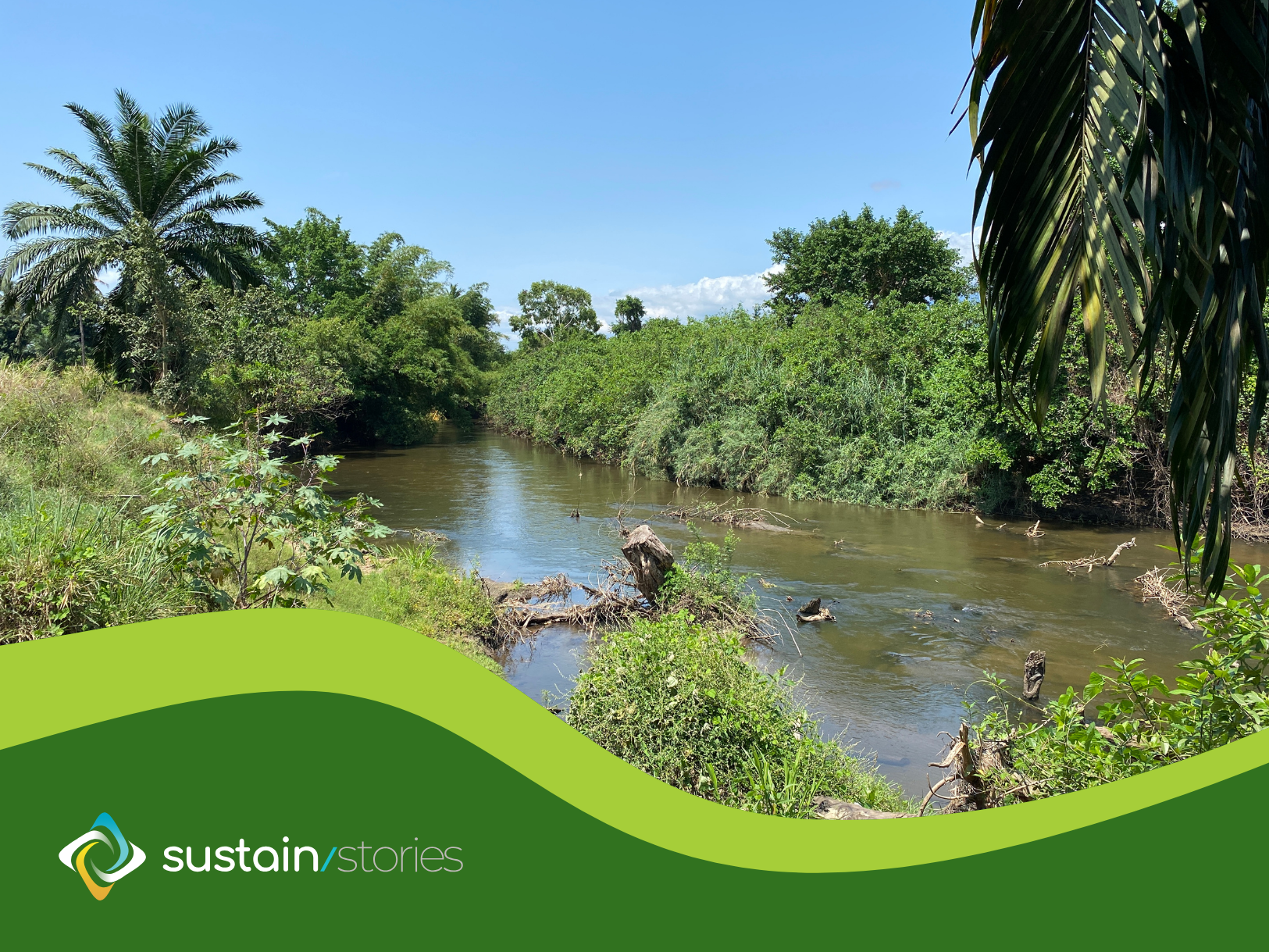
Part of Londo River, one of the key river that the WUA is working to restore. Photo: AWF
In the SUSTAIN landscapes across Tanzania and Mozambique, we have seen that when communities, Water User Associations (WUAs) and local authorities are brought together around water — not only as beneficiaries, but as stewards — a shift occurs towards water as a shared responsibility. And when water is governed collectively, ecosystem stewardship becomes possible.
Two examples from SUSTAIN illustrate this shift: the restoration of the Cagole Spring in Mozambique and the strengthening of WUAs in the Kilombero Valley in Tanzania. Together, they point to a simple but powerful truth: the path to ecosystem stewardship runs through water governance.
Cagole Spring, Báruè (Mozambique)
Although Cagole Spring is a critical water source for surrounding communities, pressure from deforestation and expanding agriculture, coupled with a lack of responsibility for protecting the spring or managing the catchment, was causing its degradation.
A biodiversity and restoration assessment under SUSTAIN identified Cagole as a priority site, and through multi-stakeholder partnerships (MSPs), a 25-member Natural Resource Management Committee (NRMC), including eight women, was formally established to manage and protect the spring and its surrounding area. The committee now oversees restoration, enforces rules, and coordinates with district authorities. This stewardship is reinforced by a payment-for-ecosystem-services scheme that compensates community members for maintaining the site. Cagole’s recovery started when the spring became a governed water source with clear rights, responsibilities and incentives.
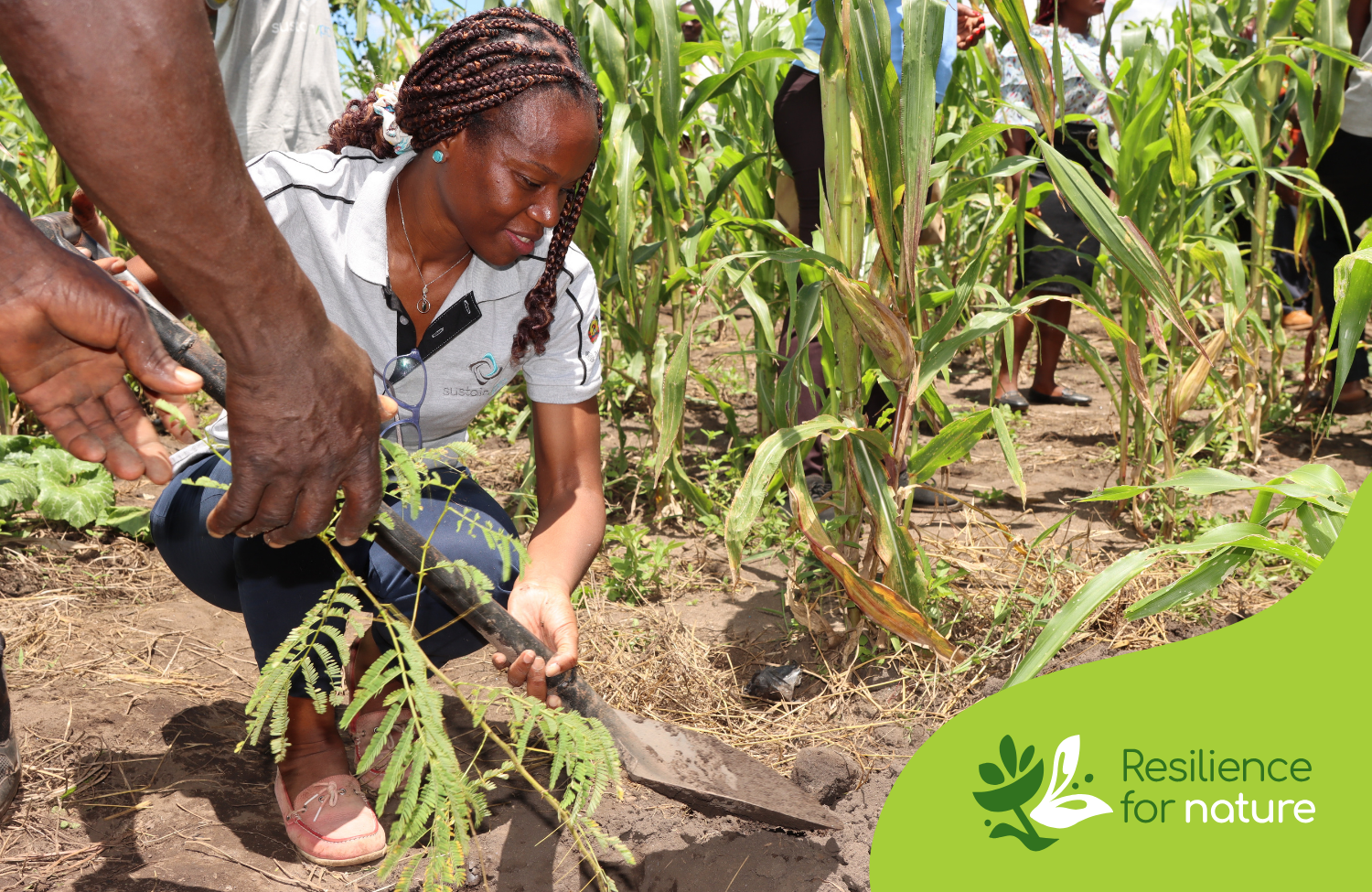
Maria Matediane (IUCN Senior Officer for SUSTAIN Pro) during visit at Cagole river spring with local leaders and SUSTAIN Pro Team. Photo: IUCN/Olavio Mazivila
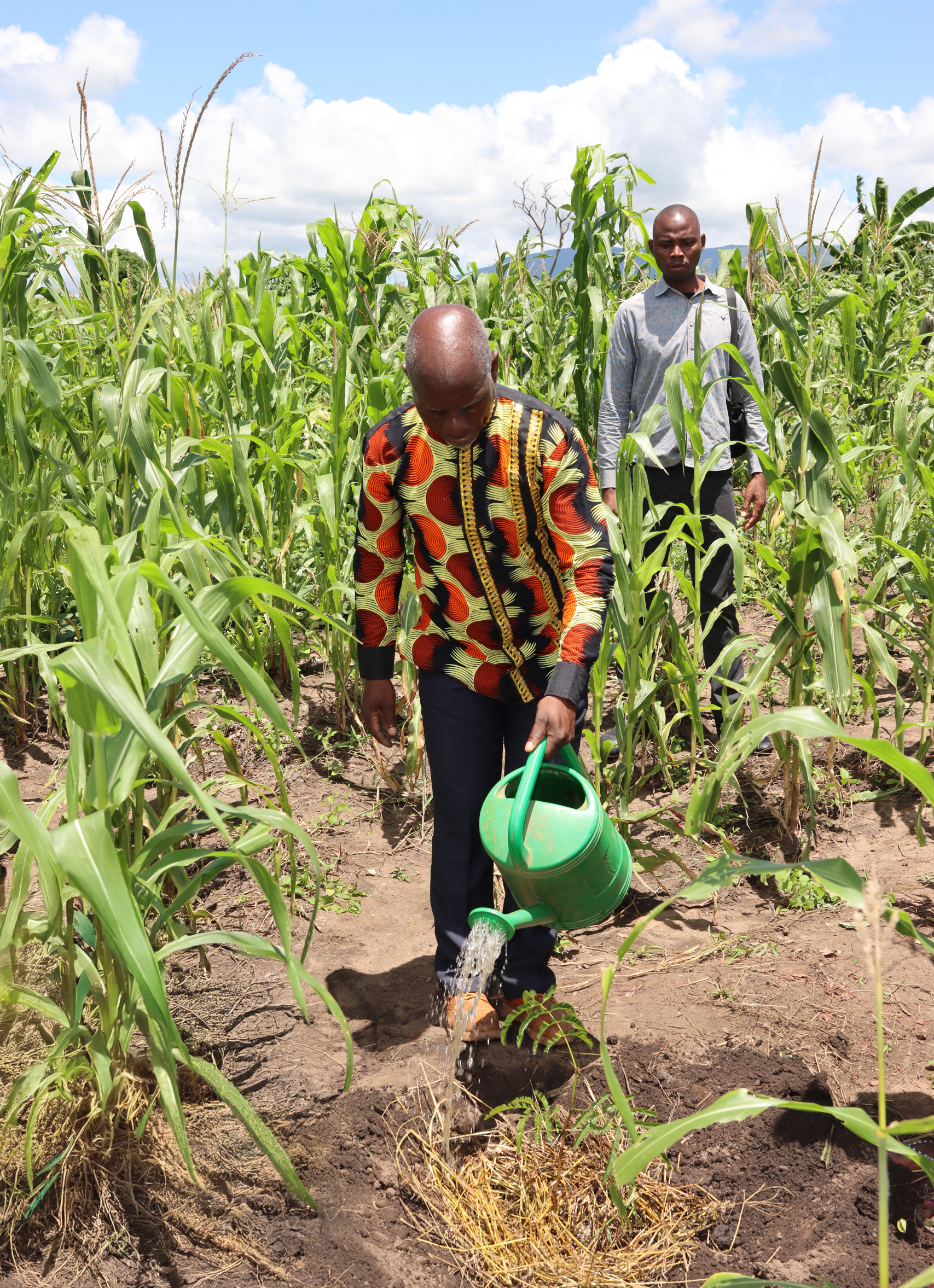
Davide Franque (District Administrator) planting a tree during spring visit. Photo: IUCN/Olavio Mazivila
Ruipa WUA, Kilombero (Tanzania)
Like many WUAs in Tanzania, Ruipa’s initial challenge was less about technical know-how and more about legitimacy: who is included, who has authority to enforce rules, and whether local politics reinforces or undermines stewardship.
Ultimately, this led to Ruipa’s collapse, which was driven by three governance faults. First, exclusion: two villages sat outside the WUA, resisted its authority, and weakened collective compliance across the sub-catchment. Second, political interference: local leaders enabled cultivation and other activities along riverbanks despite regulations, eroding conservation norms. Third, fragile leadership: without support and credibility, the WUA’s leadership weakened and operations stalled.
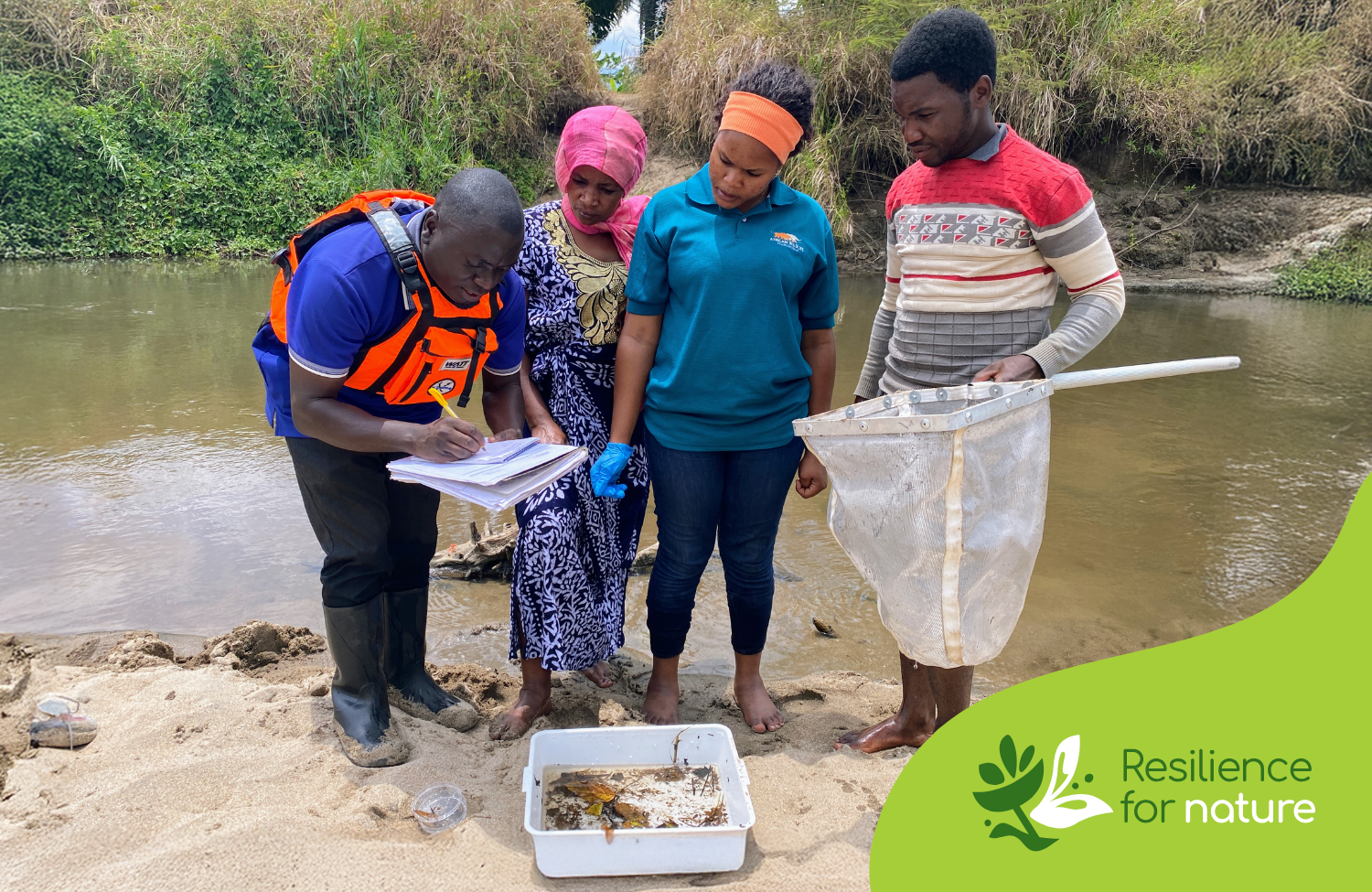
River Health Assessment at Ruipa WUA Revitalisation. Photo: AWF
SUSTAIN Eco, in collaboration with local governance authorities, worked to reform the WUA to include all eight villages, supported through multi-stakeholder partnerships and negotiations to restore a shared mandate for river protection. Political leaders were engaged from village to ward level to align local power with agreed rules. Crucially, new leadership was elected through a fair process, resetting accountability and giving the WUA renewed legitimacy to act on behalf of all users.
“A WUA only works when everyone affected has a real seat at the table and when local leadership supports the rules, not the exceptions.” (Clarence Msafiri, AWF)
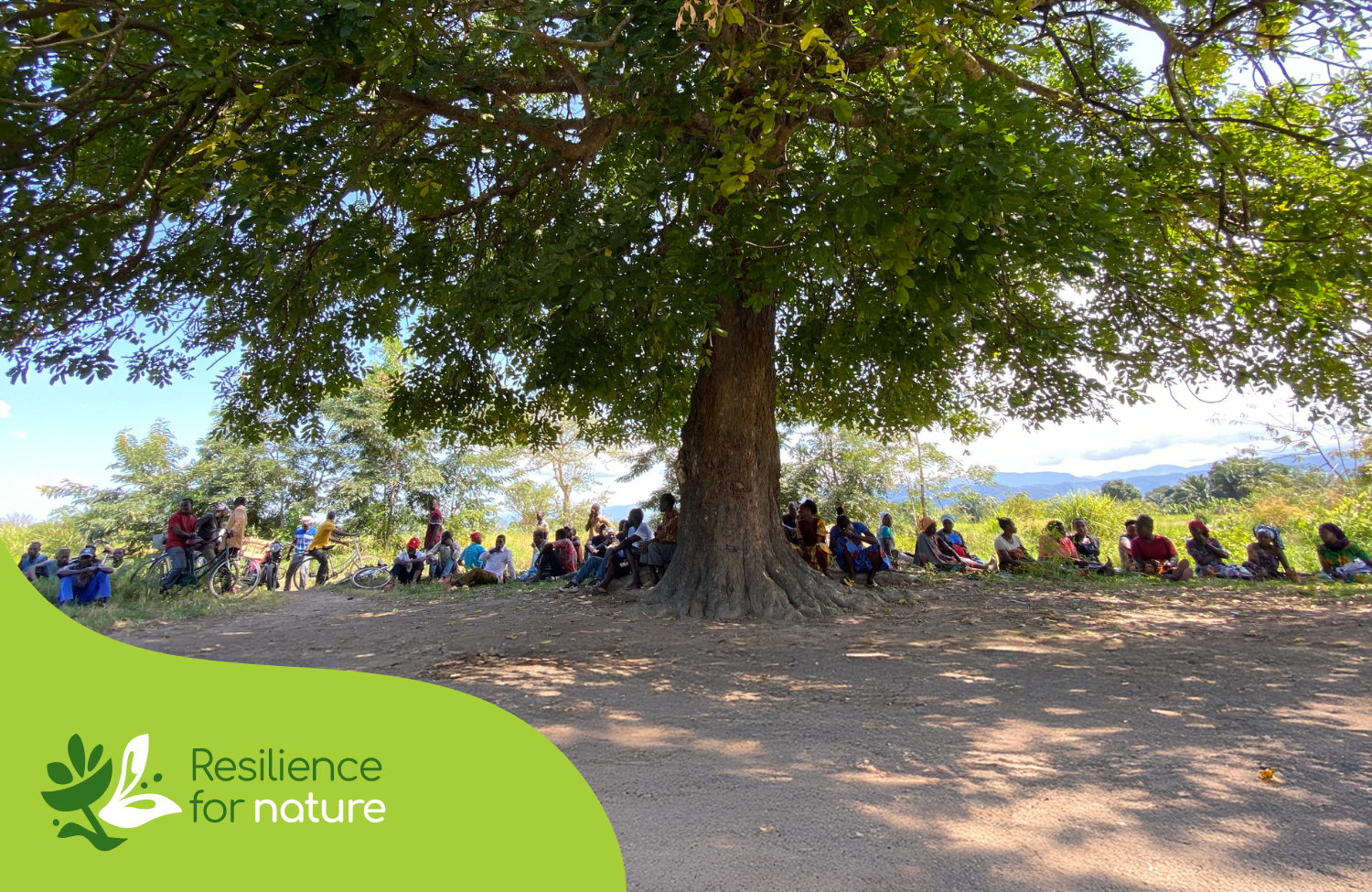
Community awareness meeting on IWRM – Ruipa WUA Revitalisation. Photo: AWF
Ecosystem health needs local stewardship
The stories of Cagole and Ruipa are different in form. In one case, the spring gained guardians. In the other, a fractured WUA was rebuilt into a legitimate institution. In both, ecosystem stewardship followed when people were given the authority to manage water resources. WUAs and Natural Resource Management Committees already sit at the heart of water governance in Tanzania and Mozambique. They are the bridge between communities and basin authorities, charged with turning Integrated Water Resources Management from policy into practice.
SUSTAIN’s approach has been to work with these institutions, strengthening their governance, linking them to local authorities, and attaching financial mechanisms such as payments for ecosystem services and financial literacy support so that stewardship is not just a moral duty, but a viable economic choice. If ecosystem stewardship is to move beyond isolated success stories, this model needs to be replicated across landscapes, investing in the local institutions that govern water, financing their role, and recognising that the health of rivers, springs and wetlands ultimately depends on who is empowered to care for them.
This article is part of the SUSTAIN Stories campaign, which is celebrating the ongoing successes of SUSTAIN across its three pathways and the individuals and communities that make it possible. The SUSTAIN initiative is supported through the generous contributions of Norwegian Agency for Development Cooperation (NORAD) and The Swedish International Development Cooperation Agency (Sida).
