By Felipe Vasquez, Fundación Ingenieros en Acción – Ecuador (FIEA), with IUCN’s support through the Building River Dialogue and Governance (BRIDGE) programme to the project Warmi Yakukamak: Women Water Guardians of the Napo Basin, Ecuador.
There is a particular ache that almost no one has documented, and yet it surfaces every time you ask an Amazonian woman living along the banks of the Napo about her childhood: the ache in her shoulder.
Kerly Andi, from the community of Runashitu, remembers it precisely. Three times a day she had to walk down to the river with a bucket to fill the tank at home. She remembers her childhood, and she remembers that the girls, though they had little strength, were the ones who did it. She remembers with clarity the weight of the container settling into her shoulder and staying there until she reached the house. To the weight was added fear, because down at the river there were sometimes snakes.
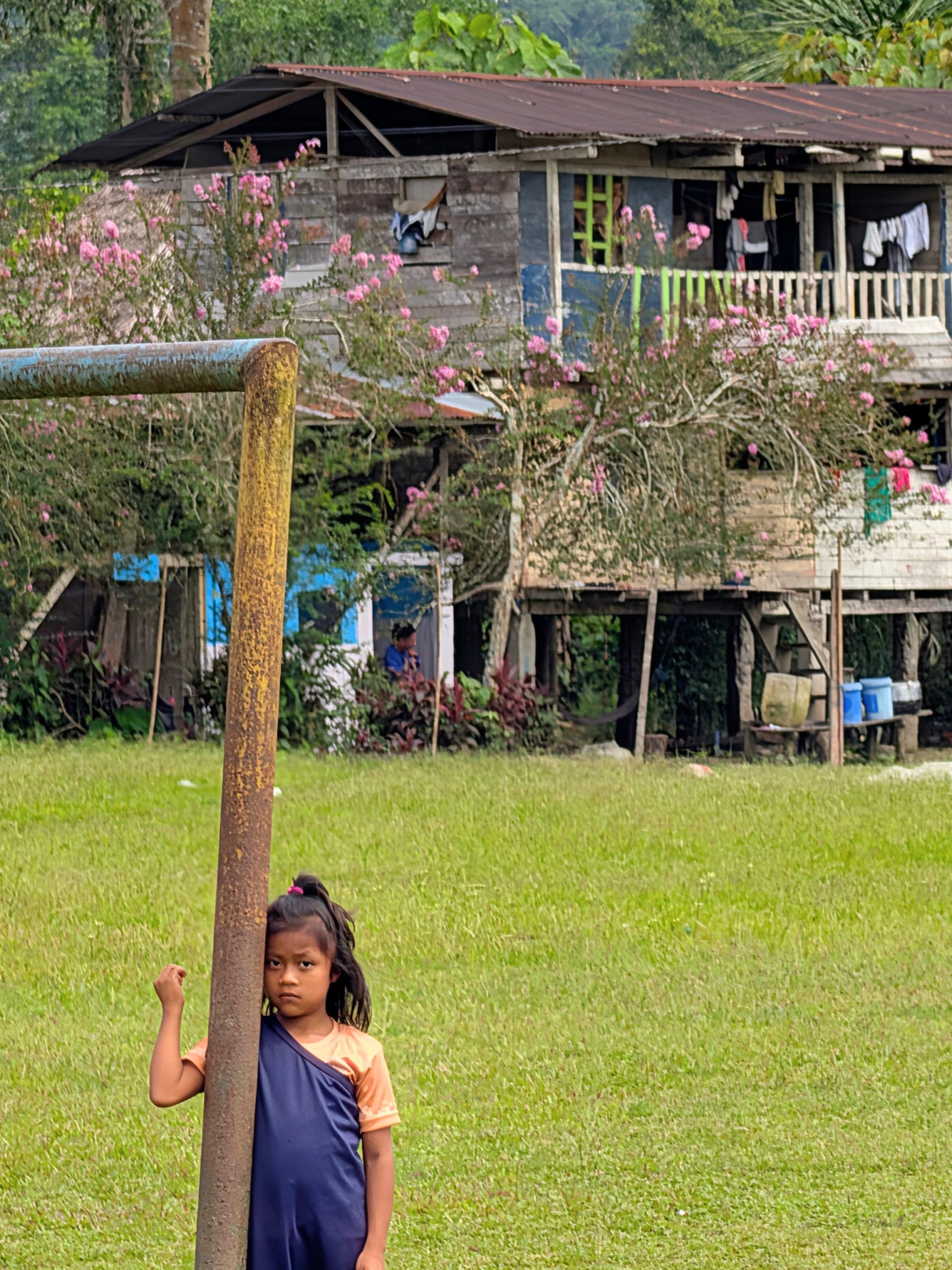
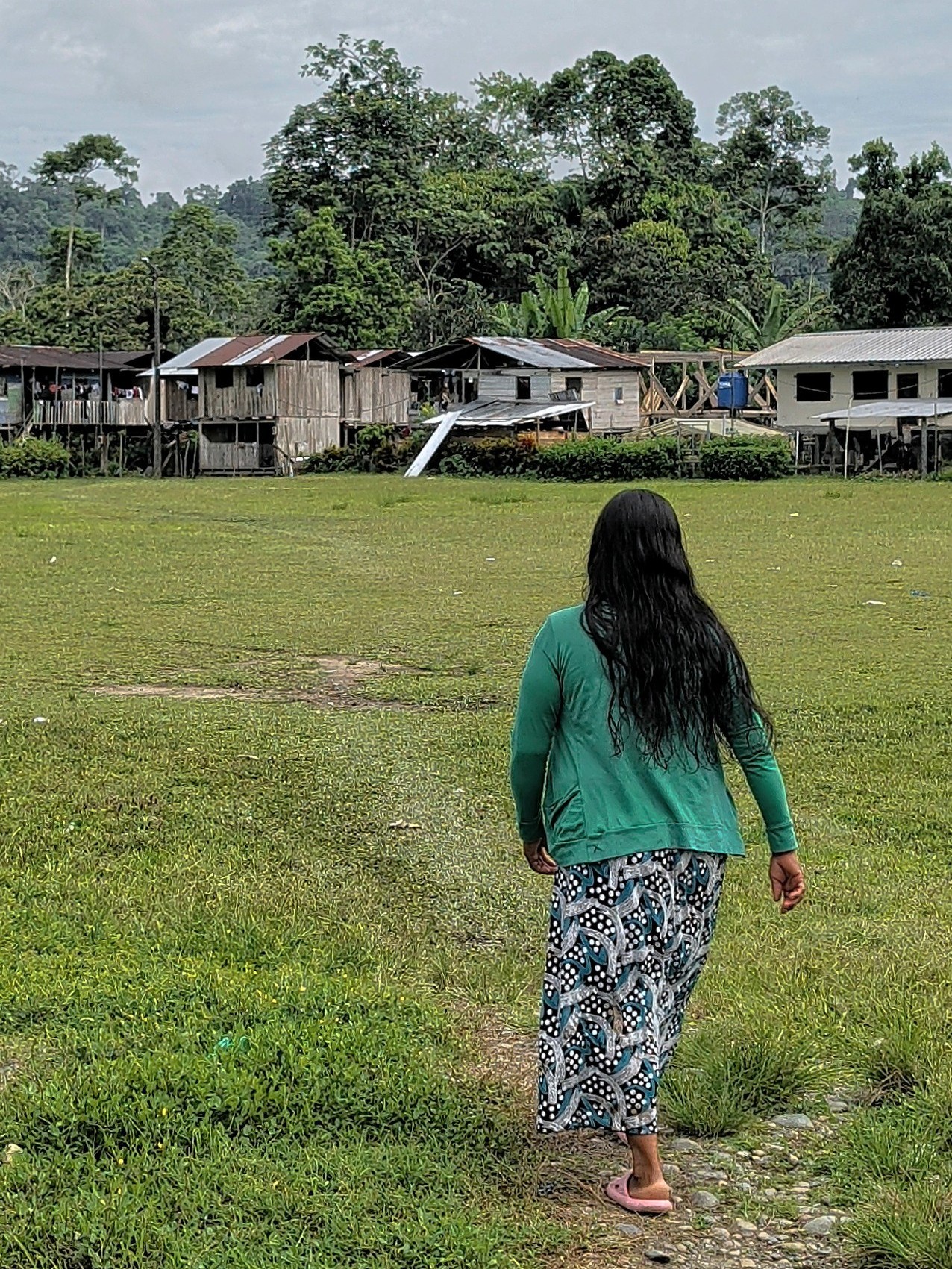
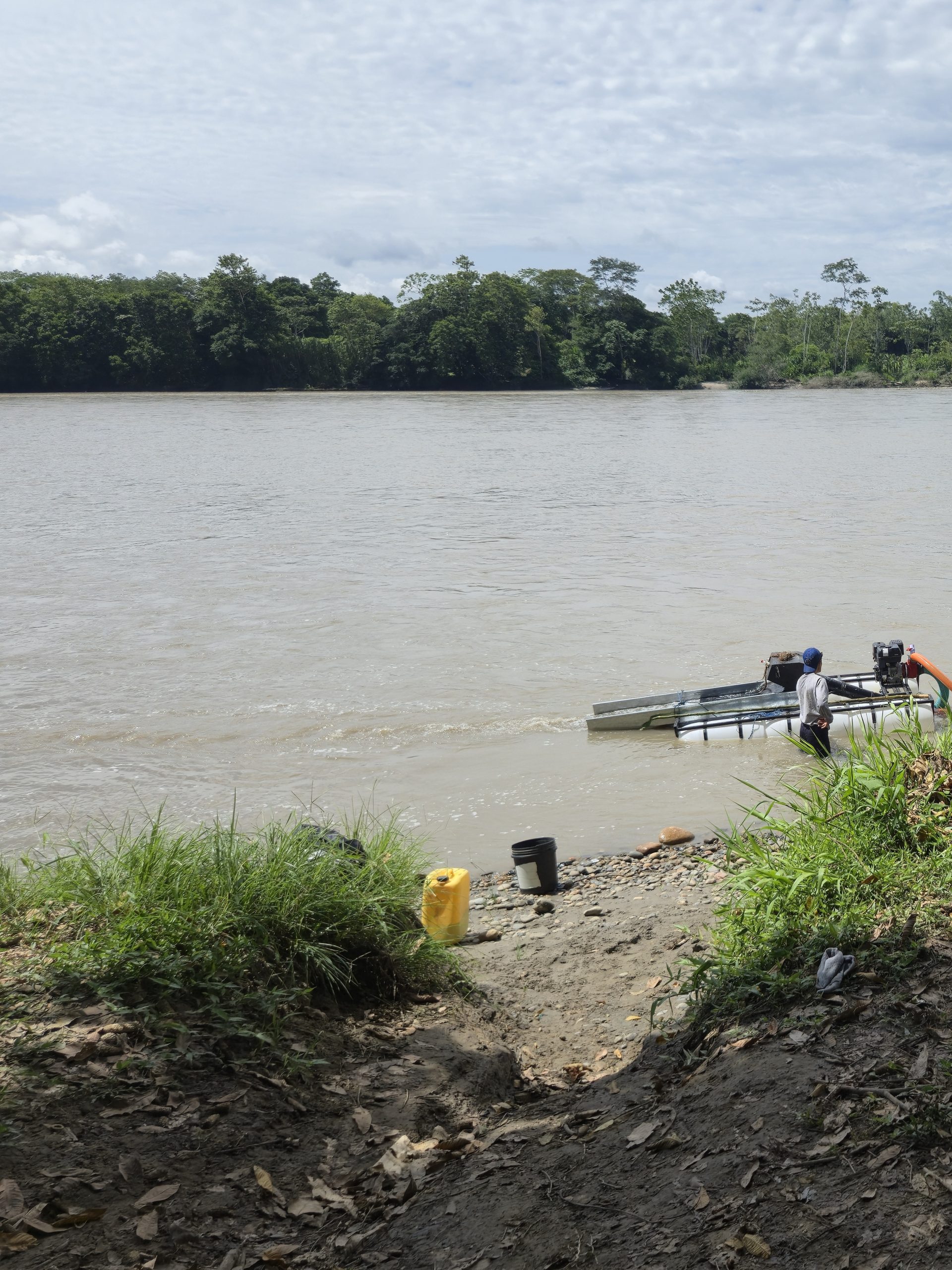
A girl, a bucket, and a path walked three times a day. That is where this story begins. But to understand it, one more image is needed, and it came from a woman in this same process, who condensed into a single sentence what the rest of us struggle to explain: that water is our life, that water runs through our veins in the form of blood, and that the water we drink and use is inside our very being.
In that local wisdom lies, I believe everything this account needs in order to begin. More than half of what makes up a human being is water, and in the form of blood it distributes itself through the body without asking anyone to prove their worth. It reaches the heart and it reaches the last toe with equal diligence, never pausing to ask which of the two matters more. And if the vein closes somewhere along the way, it is not that stretch that falls ill: the whole person does.
With that same image I want to say that the planet works in the same way. Springs, streams and rivers are its veins, and through them travels everything that sustains the rest. This is why looking at water through the lens of the basin is not a technical way of seeing it: it is the only complete way of understanding that what happens where water is born determines whether there will be abundance or misery downstream, and that harm never stays still where it occurred.
And this bears saying plainly, because water has no borders, and neither does its cycle. What evaporates today over the forests of the Napo falls tomorrow as rain thousands of kilometres away; what is fouled in a small ravine keeps travelling, joins another stream, swells a river and ends in the sea that belongs to us all. In the specific case of the Napo, the river rises in the Ecuadorian Andes, crosses the Amazon, enters Peru and surrenders itself to the Amazon River. The girl carrying water in Runashitu and the fisherman casting his net kilometres downstream are connected by the same system, and although they will never meet, they share something: blood, in the form of water.
And that blood does not travel alone. The Napo basin is one of the most biodiverse places on earth, a place of high endemism, with species still undescribed, such is the complexity of its ecosystem and home to birds, amphibians, insects and trees that sustain the water cycle that in turn sustains them. It is an abundance of natural wealth that is difficult to describe and terribly easy to lose. And it teaches us something economics forgot along the way: in an ecosystem, no one is more than anyone else. Human beings do not sit above the system, administering it from outside; we are simply one more species among all the others, as dependent on water as the tree, the bird, or the river otter. Which is why caring for the water of one community is never only about the water of one community.
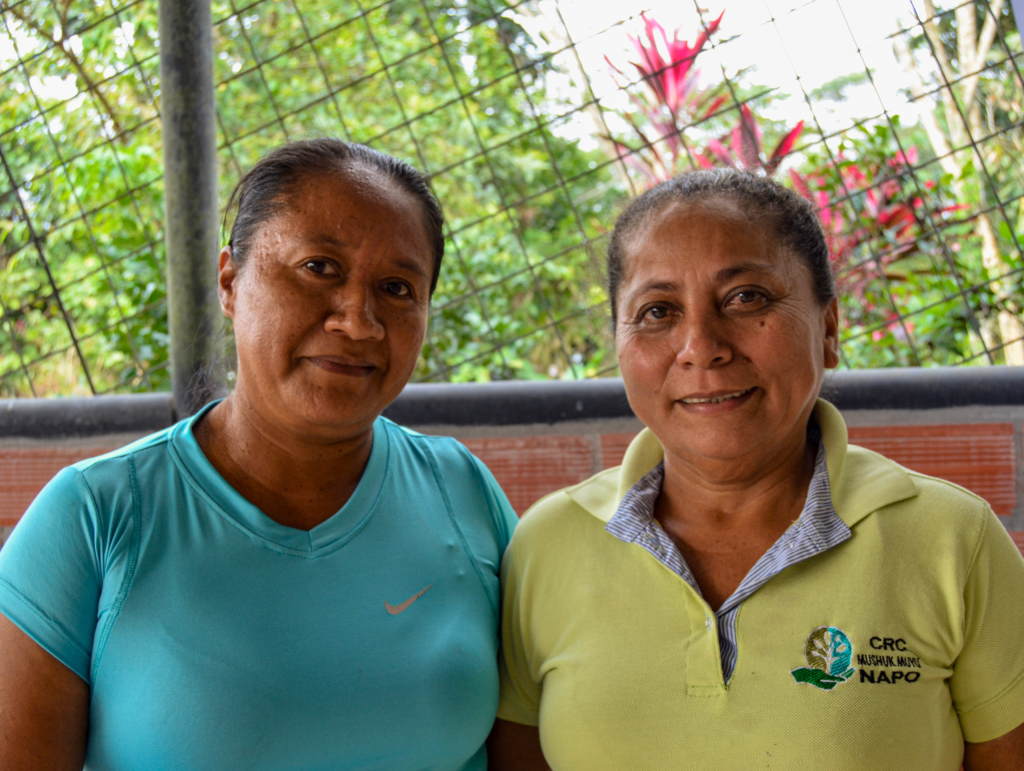
Let us return to the parish of Chontapunta. In the community of Los Ríos, until a few years ago, water reached people’s homes. Lourdes Santillán tells it without drama, which is precisely what makes it unbearable: they had safe water at home until an oil spill damaged the river they drew from. Since then, there has been no stable supply. For now, a tanker truck comes every two days and fills a storage tank at the house, and from that tank comes everything: the cooking, the bathing, the laundry. When the truck does not come, you ask a neighbor for the favour, or you go elsewhere to wash. The water tanker costs them nothing: it is delivered by the oil company itself. The same company that broke the river is the one now replacing it with a truck.
Gisella Granja, from the same community, adds the scene one would rather not have heard. She took her six-month-old son to the Umuyaku River, the one they drew from, as has always been done, and shortly after bathing him the child’s skin broke out in hives. That did not used to happen. And she describes what is left: a solitary river. No one fishes now, for fear the fish are contaminated. No one goes down to bathe, when once the whole community would come down with their buckets and the families would gather. The river is still there. It simply can no longer be used.
In Santa Estefanía de Maltapura, another community further upriver, people draw water from the Napo itself. The women describe skin problems and infections after using it, and those with piped water (captured from the Nap river) see it run the colour of chocolate whenever the rain falls hard.
In a province where nearly three out of four people live on less than three dollars a day, and where around 35 % of children under five in Indigenous Amazonian communities carry chronic malnutrition, a sick river is not an environmental problem: it becomes a social one. The livelihoods analysis carried out in the three communities confirmed this from another angle: of the five forms of capital with which a family sustains itself, the most critical is the financial one. Poverty and unsafe water are not two problems: they are the same problem, seen from opposite banks.
Looking at closely, this also comes out of history five hundred years of an encounter between two worlds that have still not finished processing their own mixing (mestizaje) . When the Western world arrived in America, it found people who were already here, with their own ways of governing themselves, of healing, and of understanding water. That encounter brought everything, and it would be dishonest to tell it only as dispossession, because it brought medicine, writing, engineering and the idea of rights. But it also brought a mercantile gaze, one that needed to put a price on things to see them at all: the forest is worth something when it is felled, the subsoil when it is drilled, the river when it is granted in concession. Whatever has no price, in that gaze, imply does not exist. And it pushed aside another way of seeing, in which the river is not a good but a relative, something that gives and also takes away, and in which the community is the river
and the river is the community.
That underlying conflict is still alive under other names: global trade, the demand for minerals such as gold, the price of a barrel, the logic that measures a territory’s development by what can be extracted from it. And yet it would be dishonest to stop the story there, because a family that needs to eat today does not have the luxury of protecting tomorrow’s forest, and survival economies also end up being destructive precisely because of survival. The difference is not one of virtue but of scale: some degrade in order to accumulate, others to make it to Monday.
And still, between those two ways of seeing the world there is one exact point where both say the same thing. When the women of the three communities were asked what water means to them, they answered each in her own words, without consulting one another something remarkably alike: “Water is life.” “For me, water means life itself.” “Without water no one can survive.” “The river is life for us.” It is a finding that comes from the voices of the field and repeats itself community after community. It means there is at least one shared ground in this territory, and that if anything can serve as a catalyst for understanding the different ways of inhabiting the world, it is water.
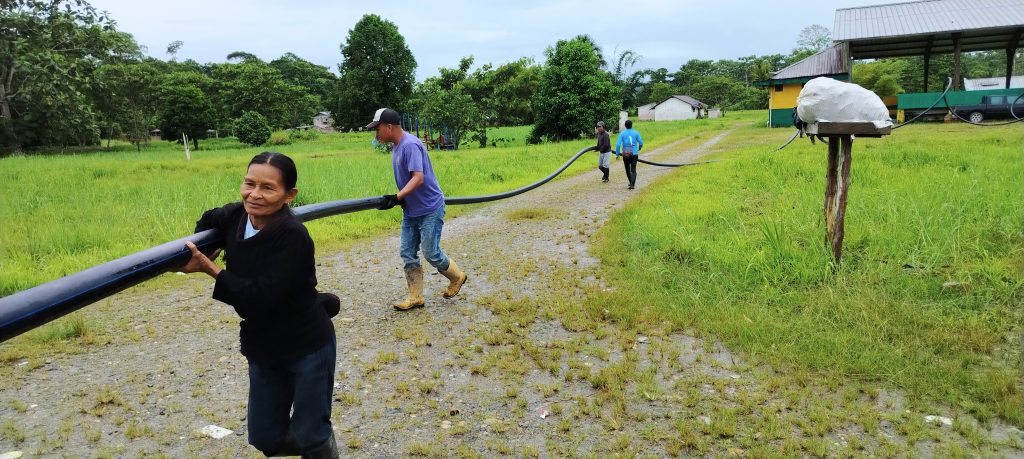
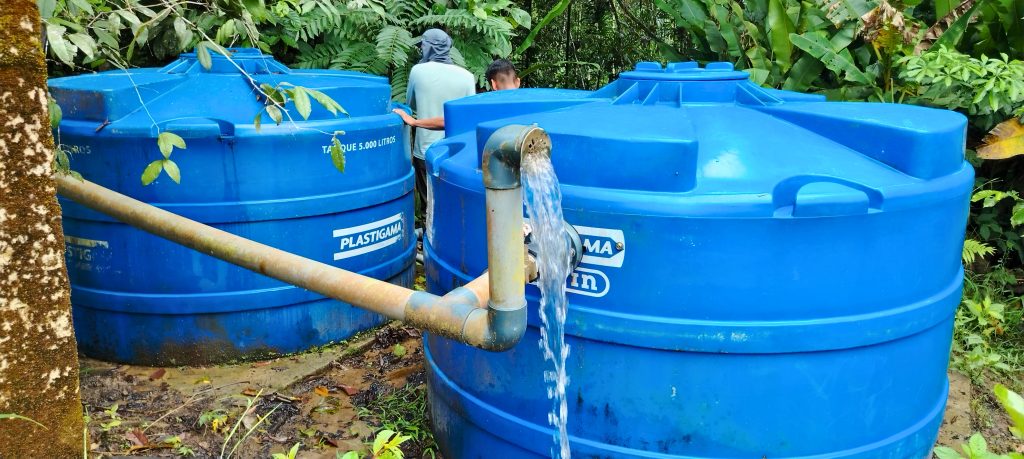
It was on that certainty that this work was built. Since 2022, FIEA and Engineers Without Borders USA have been expanding and rehabilitating the water systems of Los Ríos, Santa Estefanía de Maltapura and Runashitu. That effort revealed something uncomfortable: you can invest heavily in intakes, tanks and networks and still find unsafe water inside the house. A system without governance deteriorates, and water that leaves the tank clean can be recontaminated in the home. Infrastructure alone is not enough.
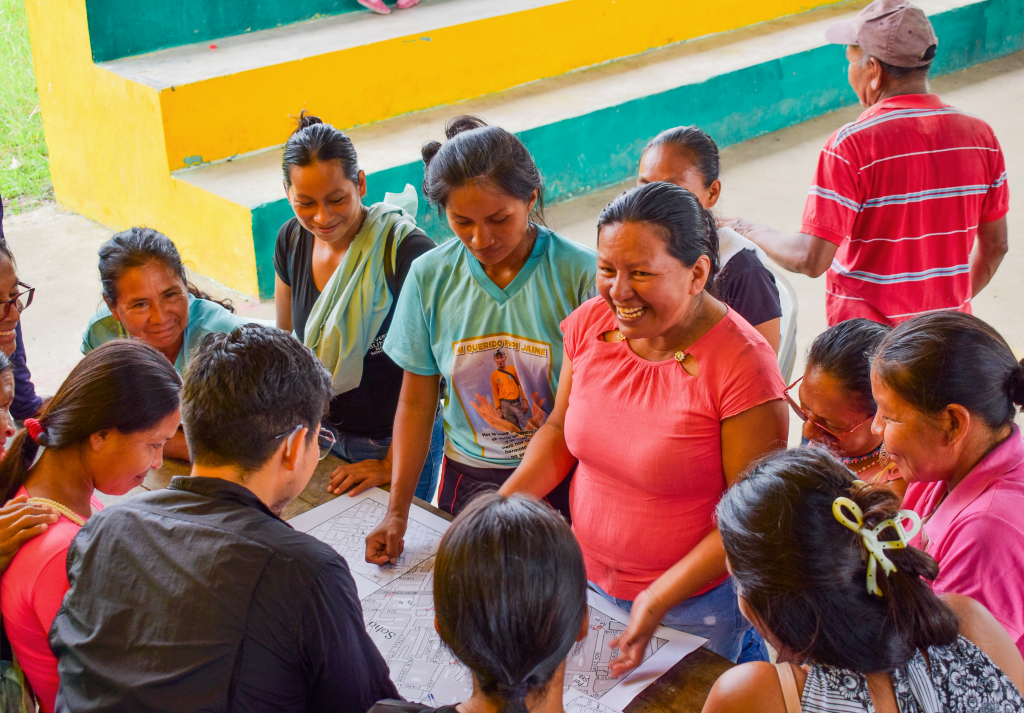
From this came the Warmi Yakukamak project, supported by IUCN’s BRIDGE programme, which made it possible to work on water governance: who decides, who administers, who operates and maintains, who is accountable. And its starting point was to listen to the women, and to the men as well.
The gender analysis did not merely measure the gap: it made it visible. Asked whether decisions about water are taken equally, 95 % of men said yes; among women, only 62 % shared that perception, difference on describing the same house, the same assembly, the same tap.
That distance is explained, in large part, by everything that remains invisible. Farm work, food production, care, and the daily management of water in the home sustain the life of the community and rest in women’s hands, yet they are rarely recognised as work that confers power or the right to decide. To this must be added that women report twice the insecurity men do when it comes to voicing their ideas in community spaces. Making that work visible, and turning it into voice, was in the end one of the central bets of the governance process.
The same analysis also revealed that men are not the wall one might expect. Almost half believe women should take on greater spaces of community leadership, and not a single one opposed the possibility of organisations led by women. The challenge, then, is not only one of will: it is also one of perception. Someone who experiences a system as fair will rarely see the need to transform it not necessarily out of bad faith, but because he cannot see what others live differently. Feeling equal does not always mean being equal.
This is why the theme of dismantling patriarchy was incorporated, worked through with men and women together and with the project’s own data as the material for conversation. Patriarchy is not a burden women should have to dismantle alone; men have to be part of the change, beginning with the most domestic of things, sharing the work of the household and continuing to the most institutional: using their vote and their voice so that water boards finally have seats occupied by those who know most about the water in the home. We move forward as a group, or we do not move forward at all.
Returning to the voices of what has been achieved: a woman from Santa Estefanía said she had only ever seen plumbers from a distance, on trips into town; today she knows what a meter is and how to adjust it. In Runashitu, Silvia Grefa says she likes doing everything, and that she does the plumbing in her own house. In Los Ríos, another woman explains that if a pipe breaks she waits for no one: she fixes it, because her husband is not home. And there is one finding we documented that almost never appears in a water report: how enormously difficult it is to manage menstrual hygiene when instead of a shower there is a bucket. We say it here precisely because it is the kind of reality that becomes invisible when those who decide about water are not the ones who carry it.
It would be comfortable to end with the percentages and the sense of a job well done. But the most important part would be missing, which is what these communities gave to us. We brought tools and knowledge for surviving in this world; the communities gave back something else: a way of understanding water that Western technique mislaid somewhere along the road. That water is not administered, it is cared for. That the “minga” (communal work) is not a participatory methodology, it is a way of existing together. That a river can be a relative. This has been an exchange, not a delivery, and that is why the gratitude here runs in the direction least common in reports: from those who came from outside towards those who opened the door.
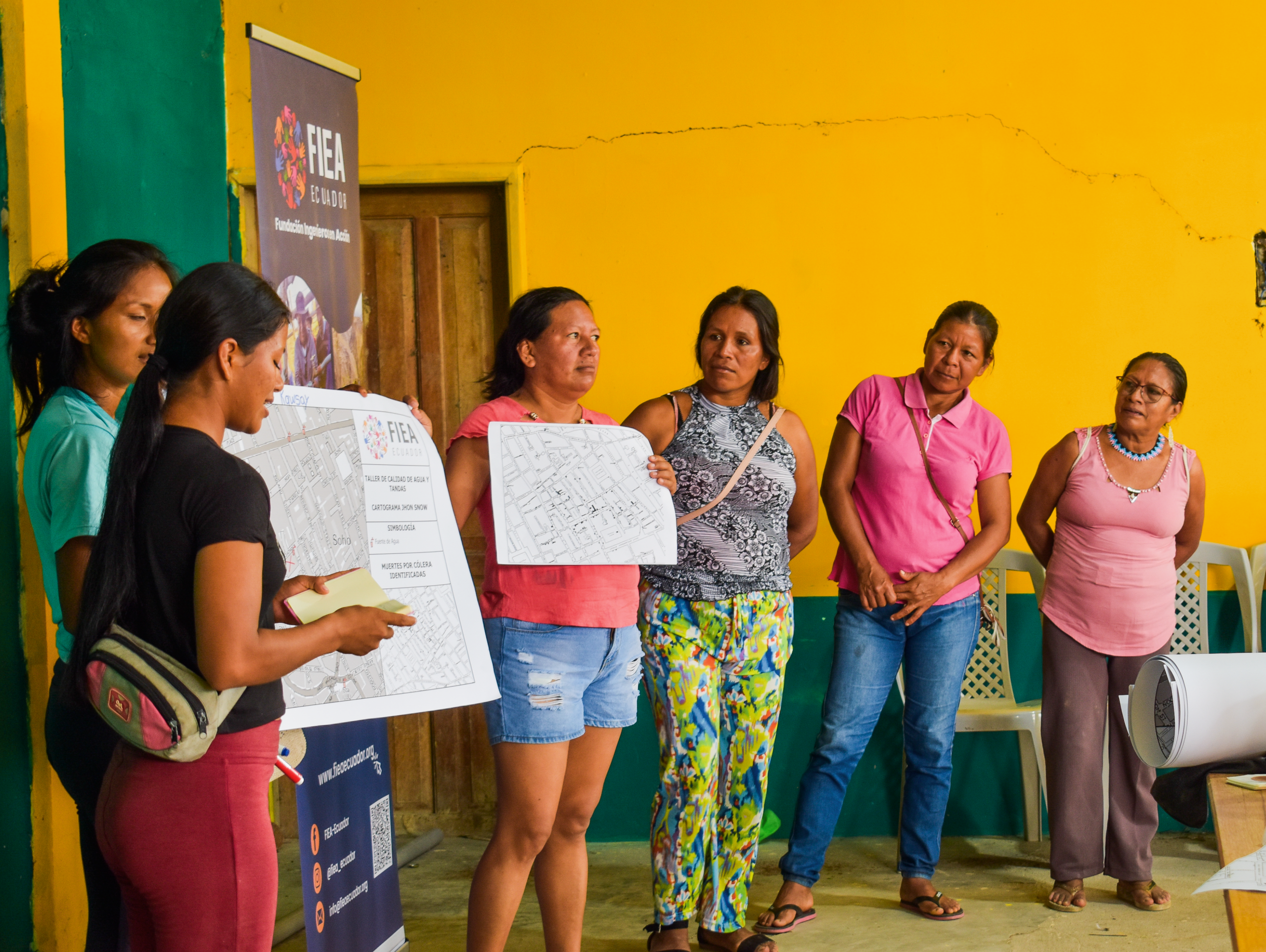
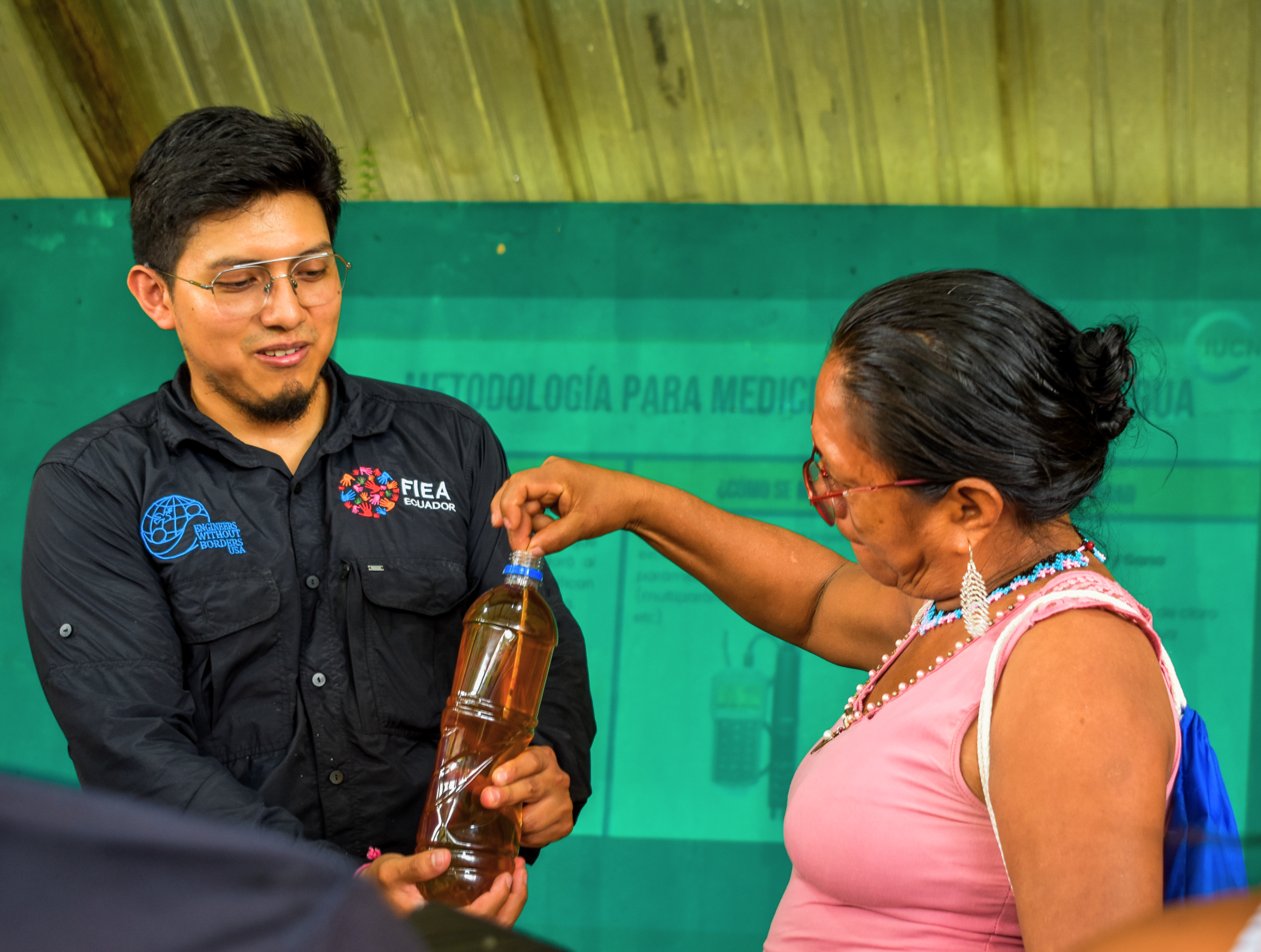
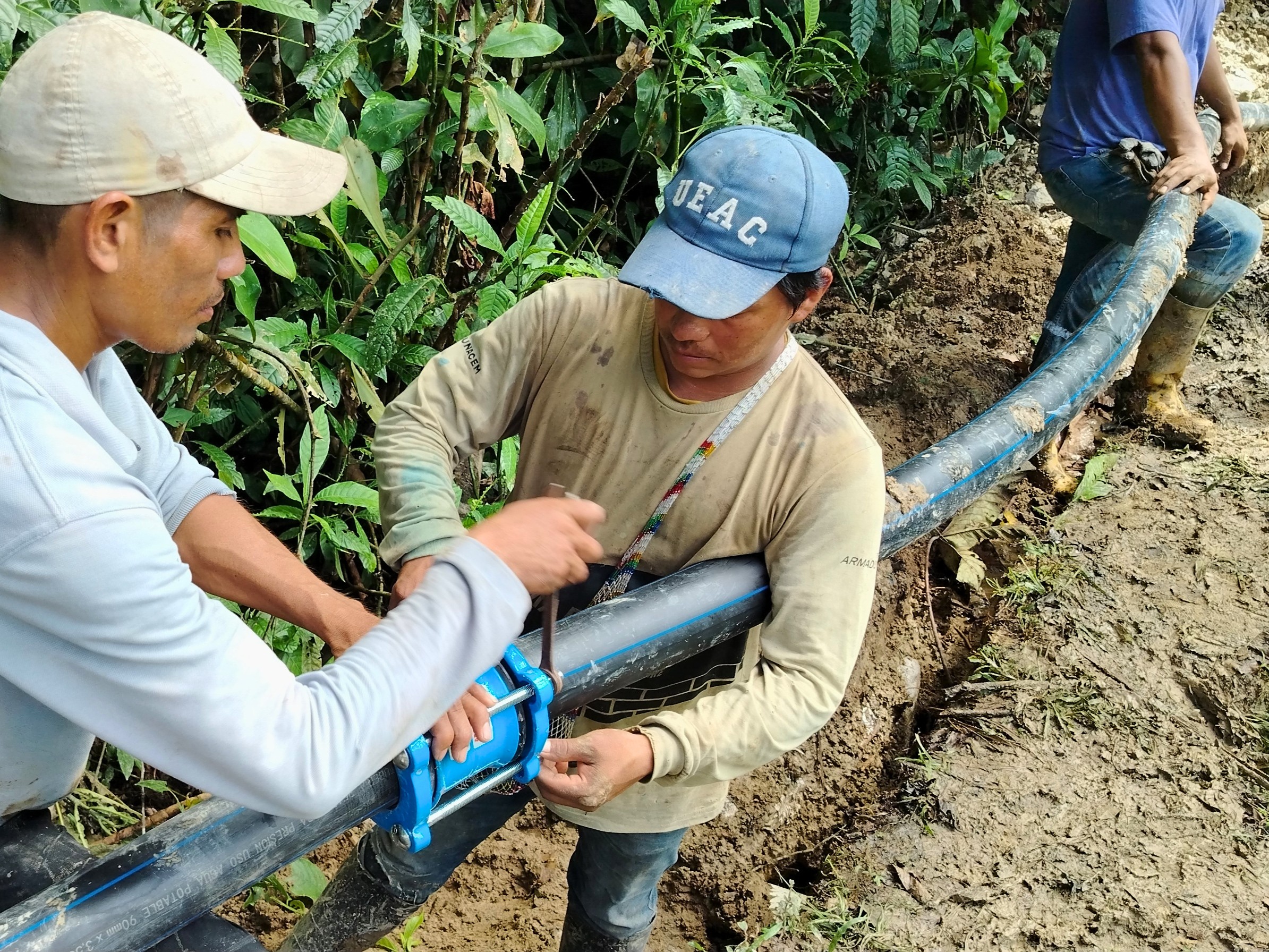
Nor is this the work of a single organisation. It exists because Fundación Hombro a Hombro had spent more than a decade running medical brigades in Chontapunta and had built, before anyone else, the trust and the evidence. Because EWB-USA brought the engineering. Because IUCN – BRIDGE contributed a framework for seeing water from a wider perspective. Because the water boards and community leaders decided to open the door. None of them would have been enough alone.
And there, perhaps, lies the most honest lesson of this road. If the river is the blood of the territory, the women water guardians are its white blood cells: few, scattered, almost invisible, and yet indispensable if the body is to defend itself. But no white blood cell protects on its own: it works because it belongs to a system. Which is why the task ahead is not only to train more guardians, but to be guardians of the guardians, to sustain through alliances what they sustain with their hands.
What we have sown together will travel in two directions in time. Backwards, making visible to mothers and fathers, grandmothers and grandfathers, a truth that until now remained unseen, so that what was passed down for generations without being questioned may begin to stop. And forwards, until the care of the Napo basin no longer depends on a project of one, two or eighteen months, but on its own people, raised in homes where the weight of water no longer has a gender. And so that it is they who, with the wisdom of their ancestors and the tools of this century, take up the care of the water. We trust that one day water will be worth what gold is worth today. In the meantime, there are those who already care for it as though it were.