
Introduction
West Africa generally has significant water resources and extensive river systems, but their geographical distribution is highly uneven. While major transboundary rivers, such as the Niger, Volta, Senegal and Gambia, flow through the region, certain areas remain highly exposed to water stress, particularly in the Sahelian regions. These rivers support essential economic activities, including irrigated agriculture, fisheries, hydropower generation and river transport. The reasonable and shared use of water resources is a driver of sustainable development and regional cooperation. However, the development of West Africa's water resources faces several challenges: limited technical, institutional and financial capacities, climate and environmental threats, divergent political priorities, competing demands for water use, etc. (Niasse, 2004; Julien, 2006).
As a symbol of a level of regional hydrological integration that is unique in the world, all West African states, with the exception of Cape Verde, share at least one watercourse with a neighbouring country. There is a total of 28 transboundary river basins, covering 71% of the region's total area. This reality makes cooperation in water management not only a necessity, but also a strategic opportunity to strengthen peace, sustainable development and climate resilience in West Africa. In this context, the establishment and promotion of a multi-stakeholder dialogue and reflection framework to foster regional consultation, cross-border cooperation, and the sharing of good practices, experiences and innovative solutions adapted to the realities of West Africa is particularly relevant. It was within this context that the West African Regional Water Forum (FREAO) was initiated by ECOWAS, WAEMU and CILSS, with its first edition held in Abidjan on 24 and 25 September 2026.
Institutionalisation of FREAO in West Africa
FREAO aims to provide a regional framework that brings together, every two years, stakeholders involved in water and sanitation in West Africa. Its purpose is to facilitate knowledge exchange, encourage political commitment and identify solutions to the challenges associated with integrated water resources management (IWRM) and sanitation in the region. The first edition, held in Abidjan, aimed to review progress and reflect on the implementation of regional IWRM and Sustainable Development Goal 6 (SDG 6), which concerns water and sanitation in West Africa. FREAO also promotes the effective and coordinated participation of West Africa in international water-related discussions. The theme of this first edition was "Harnessing Water to Transform West Africa".
The various speeches emphasised the need to establish FREAO as a genuine regional reference platform for dialogue on governance, financing, hydro-diplomacy and water security in West Africa. This first edition of FREAO was particularly marked by the address delivered by the Prime Minister of Côte d'Ivoire, who stated:
"Our rivers know no borders. Nor do they know differences of opinion. The Niger, Senegal, Volta and Comoé will continue to flow through our territories.
It is therefore desirable that we make this resource a driver of peace and development. We believe in hydro-diplomacy, that is, the art of transforming a shared resource into an instrument of dialogue and stability. Our region is not a newcomer in this field. Over the decades, it has established exemplary basin organisations, admired beyond our borders, which have demonstrated that a water-sharing agreement will always be more beneficial to all than misunderstandings (…)
(…) May this forum be the first in a long and fruitful series, and may it be a place where West Africa collectively decides to harness its water to transform itself."
Extract from the address by Mr Robert BEUGRE MAMBE, Prime Minister of Côte d'Ivoire, 24 September 2026.
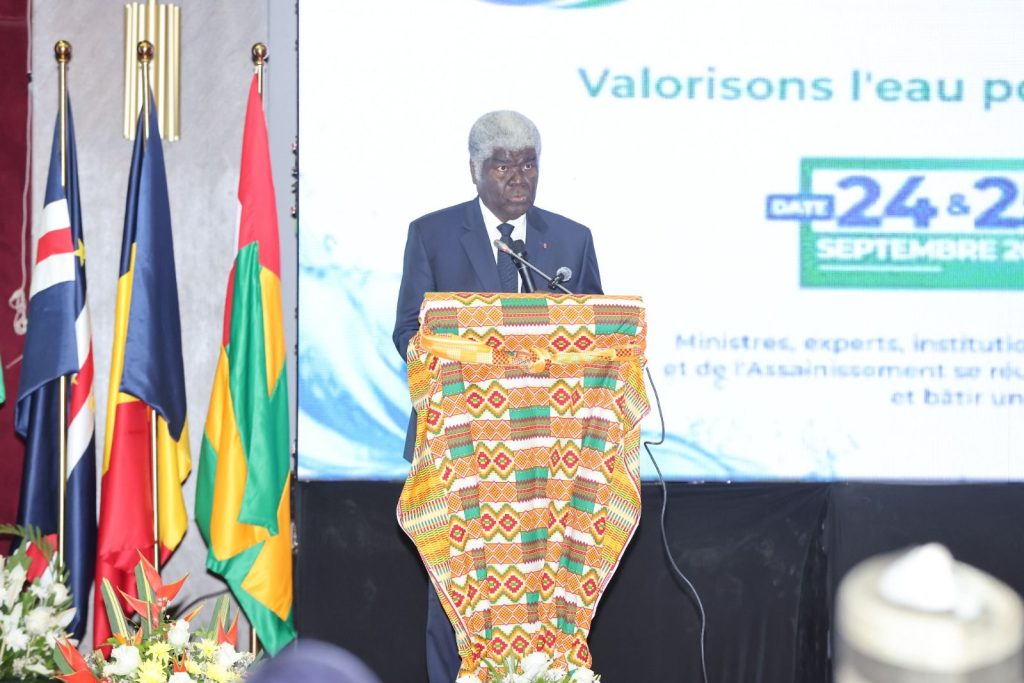
Mr Robert BEUGRE MAMBE, Prime Minister of Côte d’Ivoire, 24 September 2026.
Key messages from the sessions and the final declaration
1. Ministerial session reviewing the regional IWRM process and progress towards achieving SDG 6 in West Africa
- Make IWRM a results-oriented governance approach.
- Link hydro-diplomacy with benefit-sharing.
- Give explicit consideration to groundwater.
- Ensure that local stakeholders play an effective role in IWRM.
2. Financing water infrastructure
- Increase the share of national budgets allocated to water resource monitoring, drinking water, sanitation and major water infrastructure projects in order to definitively address the region's investment deficit.
- Improve and strengthen project preparation, resource mobilisation, technical capacities, and the operation and maintenance of water infrastructure.
- Ensure that Indigenous People and local communities are sufficiently involved in project preparation and implementation.
3. West Africa's participation in the 2026 United Nations Water Conference
- Adopt a Common West African Position for the 2026 United Nations Water Conference, reflecting the region's priorities, specific challenges and ambitions.
- Establish a small group of thematic experts to follow technical negotiations and ensure that the Conference's final declarations incorporate West Africa's financial and technological priorities.
- Establish a follow-up committee to translate the political and financial commitments secured into operational roadmaps at regional and national levels.
4. Regional cooperation and hydro-diplomacy
- Make hydro-diplomacy a lever for peace and stability by ensuring sustainable financing and expanding hydrological monitoring networks, while promoting transparent data-sharing and the coordinated management of shared infrastructure.
- Make transboundary basin organisations genuine drivers of major investments that support shared prosperity, peace and stability in transboundary basins.
5. Water–Energy–Food–Environment Nexus
- Adopt an integrated "Nexus" approach to maximise the efficiency of water use in irrigated agriculture and hydropower generation.
- Protect headwaters and wetlands, and restore degraded soils to ensure the sustainability of the water cycle in the face of climate hazards.
- Restore and preserve the ecosystems of the Fouta Djallon Highlands in an integrated manner, as the true "Water Tower of West Africa".
6. Gender, youth and social inclusion
- Promote women's and young people's direct access to decision-making bodies, financing and water resource governance.
- Address disparities by ensuring universal, inclusive and secure access to drinking water and sanitation.
- Establish and promote training, mentoring and technology transfer programmes specifically for young people and women, in order to strengthen their expertise and stimulate green eco-entrepreneurship.
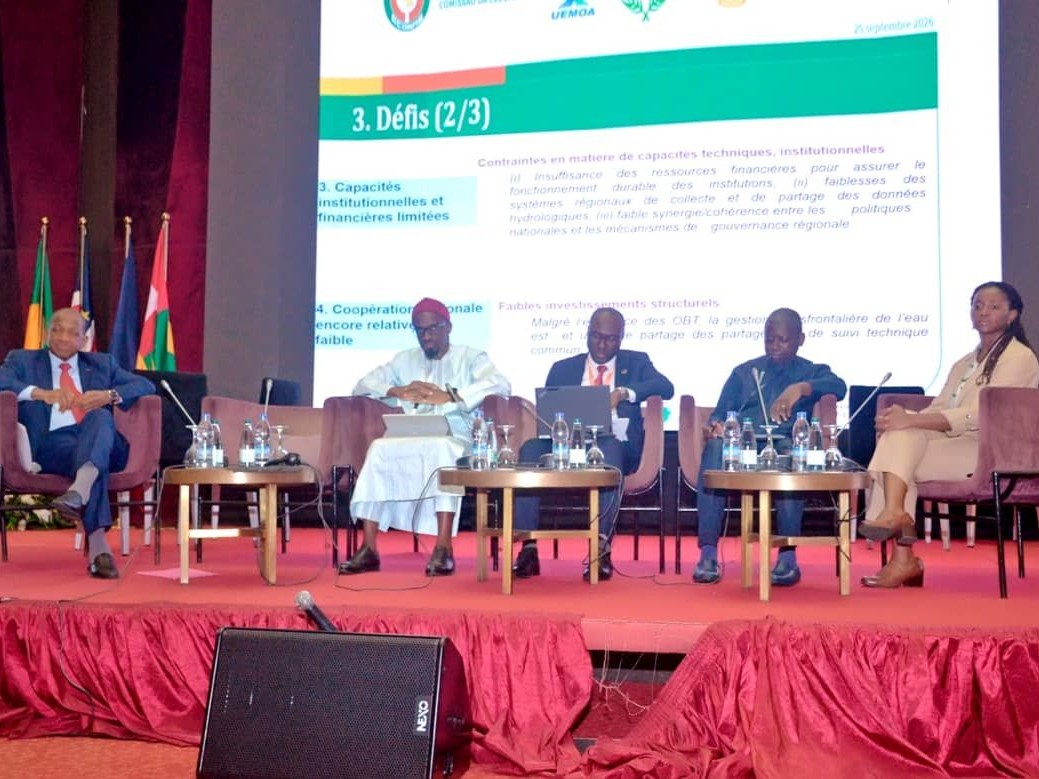
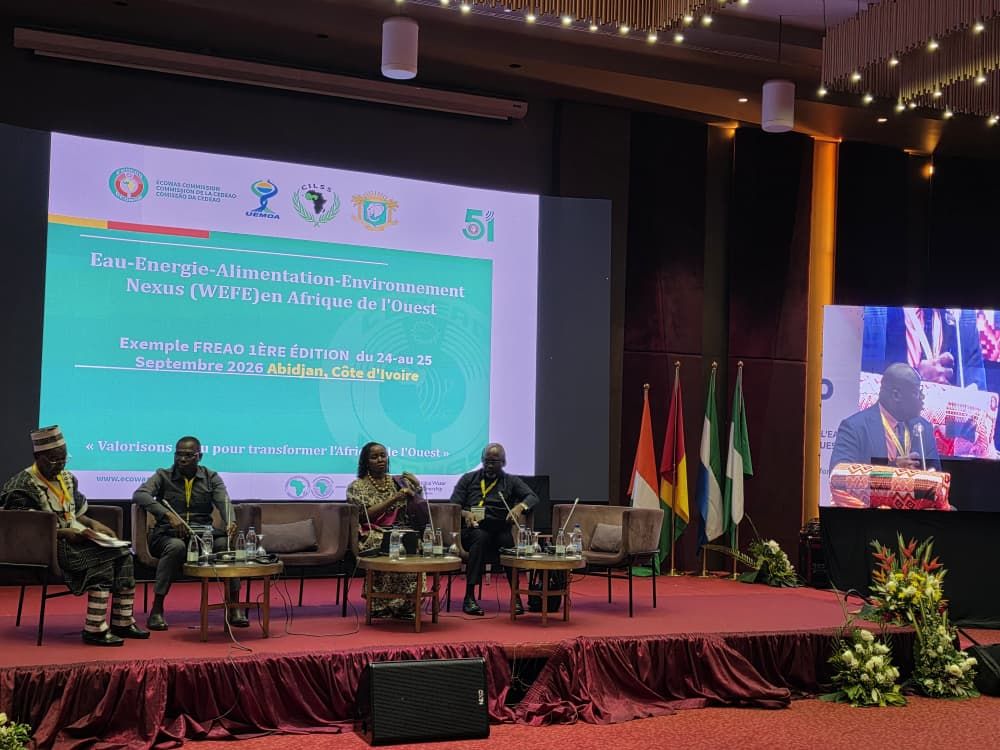
Presentation by IUCN of the report by the regional working group on hydro-diplomacy and regional cooperation.
Moderation by IUCN of the session on the water-energy-food-environment nexus.
This first edition was marked by the adoption of a final declaration structured around five major commitments:
- Commitment to integrated and resilient water resources management.
- Mobilisation of innovative and sustainable financial resources for water resource management and monitoring, sanitation and major water infrastructure projects.
- Strengthening inclusive, equitable and participatory water governance.
- Commitment to peace, solidarity and the management of shared basins.
- Commitment to a strong and united West African voice on the global stage.
In total, more than 400 people participated in this first edition. Looking ahead, this dialogue framework, must address another major challenge: the effective implementation of the commitments set out in the final declaration. This will necessarily require genuine political will from states and subregional institutions.
IUCN awarded at FREAO
At FREAO, IUCN received the West African IWRM Trophy in recognition of its contribution to the development of IWRM in the region. This distinction highlights its commitment to working alongside states, basin organisations and partners to strengthen cooperation and water governance in West Africa.
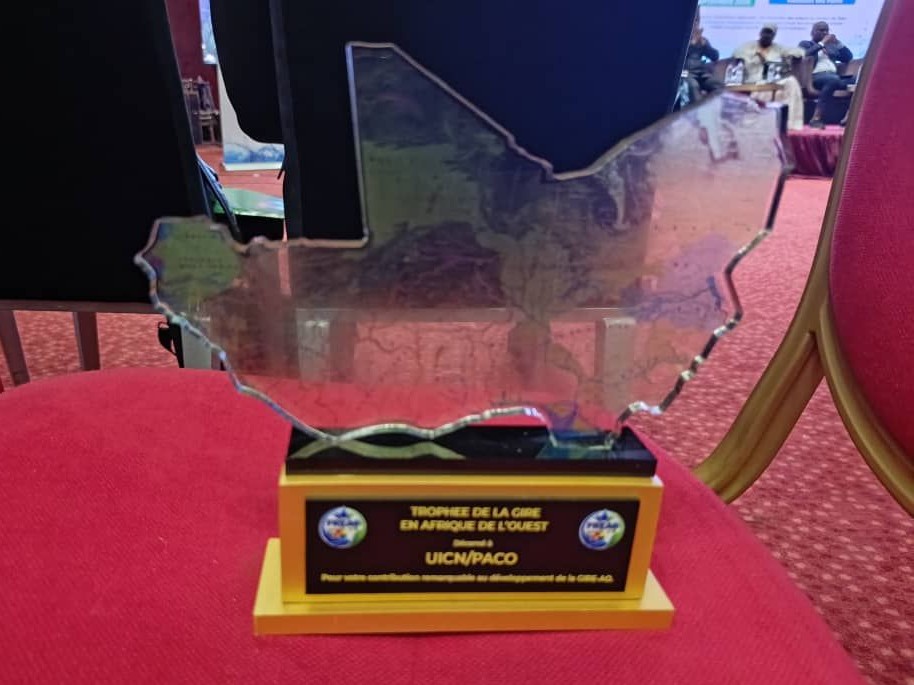
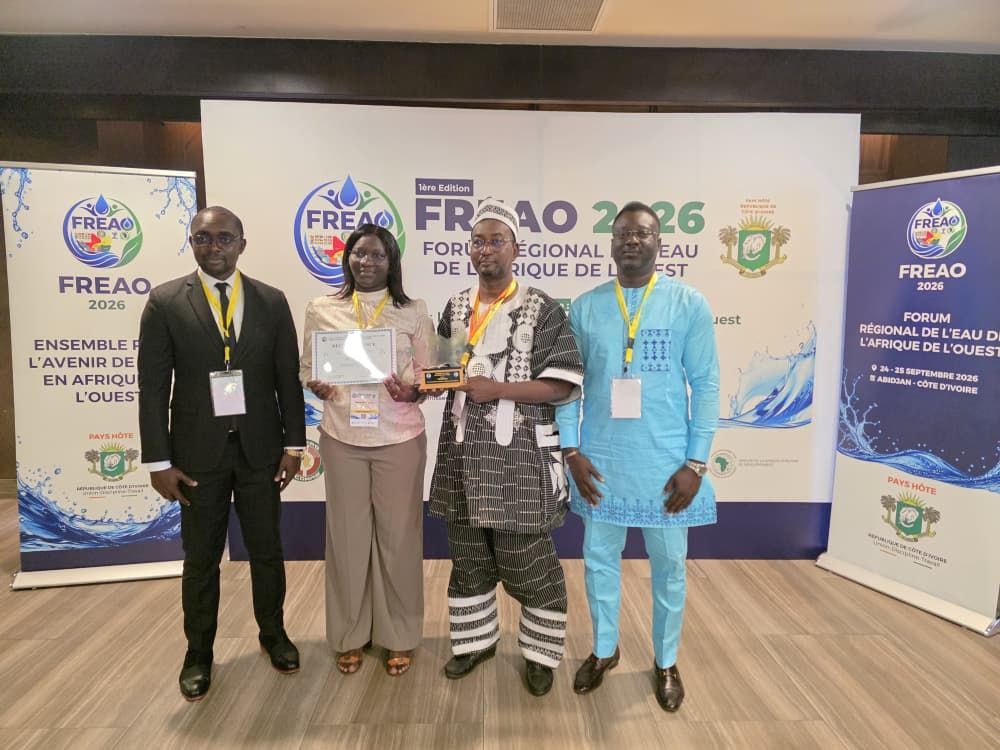
The West African IWRM Award has been granted to IUCN.
IUCN provided technical and financial assistance to CGRE/ECOWAS in organising this edition of FREAO. From a technical perspective, the organisation actively contributed over a period of eighteen months to structuring the sessions, preparing visibility materials, facilitating preparatory meetings and mobilising stakeholders to participate in the event. Financially, IUCN also covered the participation costs of a number of special guests.
BRIDGE: Supporting water diplomacy in West Africa for more than 10 years
Launched in 2011 and currently in its fifth phase, the Building River Dialogue and Governance initiative (BRIDGE) aims to strengthen water governance capacities through learning, demonstration, leadership and consensus-building in transboundary contexts. Funded by the Water Diplomacy Programme of the Swiss Agency for Development and Cooperation (SDC), IUCN supports the development and strengthening of transboundary water governance.
This article was written by:
- Armel MEWOUTH, Regional Water Focal Point, IUCN
- Sanou Ndour, Project Coordinator, IUCN
- IS Deen AKAMBI, Project Coordinator, IUCN
Resources:
- Niasse, M. (2004). Prévenir les conflits et promouvoir la coopération dans la gestion des fleuves transfrontaliers en Afrique de l’Ouest. Vertigo, 5(1), pp. 4-16.
- Julien, F. (2006). Maîtrise de l’eau et développement durable en Afrique de l’Ouest : de la nécessité d’une coopération régionale autour des systèmes hydrologiques transfrontaliers.
- ECOWAS: Economic Community of West African States
- WAEMU: West African Economic and Monetary Union
- CILLS: Permanent Interstate Committee for Drought Control in the Sahel
- WRMC: Water Resources Management Center

