
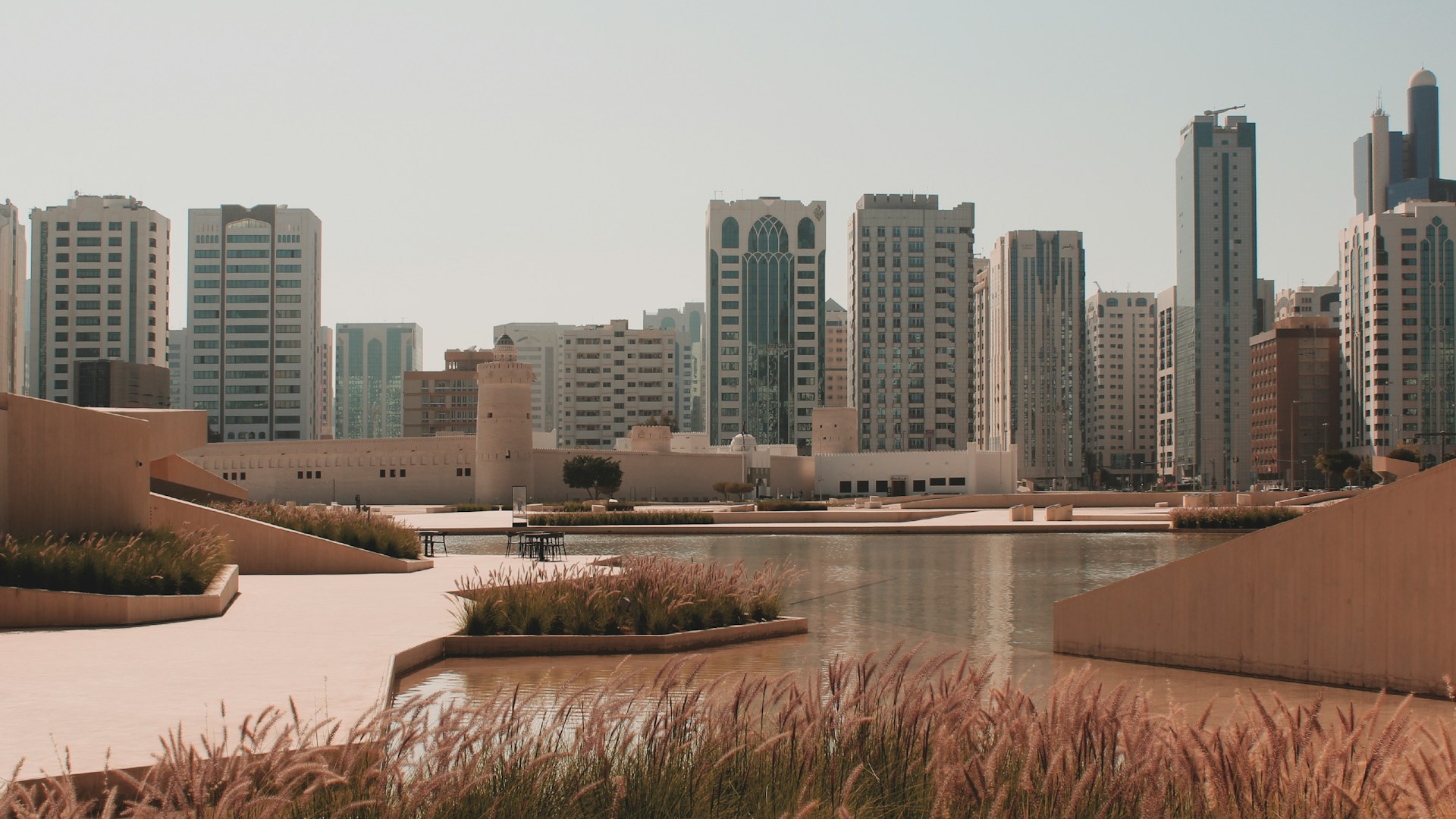
From 8 to 10 December 2026, governments meet in Abu Dhabi for the UN Water Conference, co-hosted by the United Arab Emirates and Senegal. In this story, IUCN explains what it will take for this conference to change the course of global water action.
Credit: UN Photo/Rick Bajornas
We held a major UN Water Conference only three years ago. Why do we need another one, and why does Abu Dhabi matter?
Because 2023 showed both what a conference can achieve and where it stops. New York ended a 46-year gap: it was the first UN conference dedicated to water since Mar del Plata in 1977, and it put water back on the political agenda. It produced the Water Action Agenda, with more than 800 voluntary commitments. What it did not produce was a shared direction. There were no agreed goals, no way of knowing whether the commitments add up to what is needed, and no place where countries report back.
Meanwhile, the numbers have barely moved. One in four people still lacks safely managed drinking water, and 3.4 billion people lack safely managed sanitation. With four years left until 2030, SDG 6 is badly off track.
Abu Dhabi matters because it is part of a sequence. Member States have already agreed that the next conference, in Dushanbe in 2028, should adopt a negotiated outcome: a Dushanbe Water Framework. Abu Dhabi is where the substance of that framework starts to take shape. If we treat it as another showcase of good projects, we lose two years. If we treat it as the start of a real conversation about what the world is collectively trying to achieve on water, it can be the conference that changed the trajectory.
Does the world actually have a water crisis, or a governance crisis expressed through water?
Lucas Schneider/Unsplash
Both, but the second explains the first. The physical pressures are real: depleted aquifers, more severe droughts and floods, pollution, and the collapse of freshwater ecosystems. But we are not short of solutions. We know how to restore a floodplain, protect a watershed, allocate water fairly and share a river between countries. Many of these approaches have been proven for decades.
What is missing is the system that turns that knowledge into decisions at scale: clear responsibilities, reliable data, allocation rules that hold when water is scarce, and finance that rewards good management rather than overuse. Without those, water problems are passed from ministry to ministry and from one generation to the next.
So yes, I would call it a governance crisis that shows up in our taps, our fields and our rivers. In a way that is encouraging, because governance is a choice. It can be addressed – and very quickly.
Water connects climate, biodiversity, food, energy and economic development. Why do governments and international institutions still manage these issues separately?
Philip Arambula/Unsplash
Largely because that is how our institutions were built. Ministries, budgets and international agreements were designed around sectors, and water ended up everywhere and nowhere. Climate has the Paris Agreement, biodiversity has the Kunming-Montreal Global Biodiversity Framework, land has the UNCCD. Water runs through all of them. Yet apart from the conventions on transboundary waters and on wetlands, there is no global framework that deals with water as a whole.
The consequences are concrete. The subsidies that drive over-abstraction sit with one ministry, while the wetlands that would buffer the next drought sit with another. Climate adaptation plans count on water that energy and agriculture plans have already allocated.
The answer is not a single super-ministry. It is to make water an explicit part of the plans countries already produce, such as their nationally determined contributions, national biodiversity strategies and drought plans, and to make those plans consistent with each other. The same governments sit in all of these processes. Abu Dhabi is a chance to ask them to connect the dots.
What is missing from the way the global water debate treats nature?
Too often nature is treated as one more user of water, something that receives an environmental flow once human needs are met. In reality it is the infrastructure that produces water in the first place. Forests, wetlands, soils, floodplains and aquifers store, clean and regulate the water everyone depends on. When we degrade them, we degrade our own supply.
That degradation is severe. IUCN Red List assessments published in 2025 found that about a quarter of the freshwater animals assessed are at high risk of extinction, mainly because of pollution, dams, water abstraction and land conversion. Freshwater species populations have declined further than those of any other ecosystem type tracked by the Living Planet Index.
What is missing are targets for the health of freshwater ecosystems themselves, alongside targets for access to water and sanitation. Some of this already exists. Under the Kunming-Montreal Framework, countries have committed to conserve 30% of inland waters and restore 30% of degraded ecosystems, including inland waters, by 2030. Yet the water community rarely refers to these commitments. Bringing the biodiversity and water agendas together is one of the easiest wins available in Abu Dhabi.
If water is managed locally and at basin level, what can a global UN conference realistically achieve?
UN Photo/Mark Garten
It is true that water is local. A global conference will not fix a leaking pipe or recharge a depleted aquifer. But almost every local water problem has global drivers: climate change, trade in water-intensive goods, the direction of finance, and the absence of shared standards.
Local actors also need things that only global processes provide: political attention at the highest level, common definitions and metrics, a reason for finance ministries to take water seriously, and a moment when governments are held accountable by their peers.
The Paris Agreement did not install a single solar panel, but it changed what governments and investors consider normal. Water needs that kind of anchor. The test for Abu Dhabi is whether it produces outcomes that travel downwards: shared priorities that countries can build into national plans, a common way of tracking progress, and a clear path to an agreed framework in 2028.
What should the Conference do about cooperation over shared waters?
Make it a priority, not an afterthought. 153 countries share rivers, lakes or aquifers with their neighbours, yet only 43 have operational arrangements covering at least 90% of their transboundary basin area. Climate change makes flows less predictable, and those are exactly the conditions in which weak arrangements break down.
Three things would help. First, more countries should join and implement the two global water conventions, the UN Watercourses Convention and the UNECE Water Convention, which is now open to all countries. Second, investment in basin organisations and data sharing, including on groundwater, which remains the most neglected shared resource. Third, cooperation should be recognised for what it is: infrastructure for peace and development that deserves sustained funding.
IUCN has worked on this for many years, including through our BRIDGE programme on river basin dialogue. At the Conference, we are co-hosting a side event with Senegal, Uganda, Zambia, South Africa and the European Union on African priorities for future water governance, where cooperation on shared waters will be central.
Everyone agrees that more investment in water is needed. So why is the money still not flowing at sufficient scale?
Joel Vodell/Unsplash
There are three main reasons. First, water is hard to finance in its current form. Tariffs are often low and politically set, payback periods are long, and the risk sits with local utilities that are not creditworthy. Second, we keep paying for the wrong things. Public subsidies in agriculture and energy too often encourage overuse and pollution of the water we then pay to clean up. Third, investments in nature, such as restoring a watershed instead of building a new treatment plant, fall between categories. The benefits are spread among many users, and nobody is responsible for paying.
None of this is unsolvable. Under the Kunming-Montreal Framework, governments have already agreed to reduce harmful incentives by at least USD 500 billion a year by 2030, and part of that money could be redirected towards water security. Water funds and payments for watershed services show that downstream users will invest in upstream nature when the mechanism is right. And because most climate impacts are felt through water, adaptation finance should be counted as water finance.
Abu Dhabi needs finance ministries and development banks in the room, not only water ministers.
What does IUCN want to see come out of the meeting, and how do we move from voluntary commitments to implementation?
Our central ask is that Abu Dhabi starts the work towards a Global Framework for Water Governance and Action. Water needs a set of shared goals that everyone works towards and is measured against.
In our proposal, the framework would set outcome targets on access, on the health of freshwater ecosystems and on resilience to droughts and floods. It would back them with process targets on the foundations: national plans, data, cooperation and finance. It would not create a new bureaucracy. It would build on existing SDG 6 monitoring and UN-Water.
That is also the answer to the implementation question. Voluntary commitments create energy, but on their own they lack three things: a baseline, a review and a way of adding them up. A framework gives commitments something to be measured against, a regular cycle of reporting and a periodic stocktake of whether we are on track.
What would success in Abu Dhabi actually look like?
Jiho Choi/Unsplash
The formal outcome will be a summary of the proceedings by the President of the General Assembly, not a negotiated declaration. So success should not be judged by the text. I would look for four things.
First, a clear political signal that the 2028 conference in Dushanbe should deliver a framework with real ambitious, targets and a review mechanism, not just another declaration. Second, nature recognised as water infrastructure across all six interactive dialogues, not confined to the dialogue on water for the planet. Third, concrete commitments from finance actors, on harmful subsidies and on nature-based solutions. Fourth, a much stronger voice for the people most affected: basin communities, Indigenous Peoples, women, young people and countries in drylands.
If delegations leave Abu Dhabi with a more shared vision of what they are negotiating towards in 2028, the conference will have mattered.
The Conference closes on 10 December. What happens on 11 December?
The real work starts. The window between Abu Dhabi and Dushanbe is about seventeen months, and it includes a high-level meeting in New York in 2027. That is not long to turn a conversation into a framework that governments can agree on.
In that time, countries should bring water into the plans they are already revising, from climate and biodiversity strategies to drought preparedness. The debate on what follows the 2030 Agenda is also starting, and water and nature must be at its centre rather than squeezed into a single goal.
IUCN will keep working with Member States in New York, Geneva and the basins themselves to make that happen. Water has finally gotten its spotlight through regular intergovernmental conferences. What it needs now are commitments that last longer than the conference itself.
